I saw this bizarre little comment today on an article about The Legend of Zelda: Breath of the Wild and it immediately made me pause.
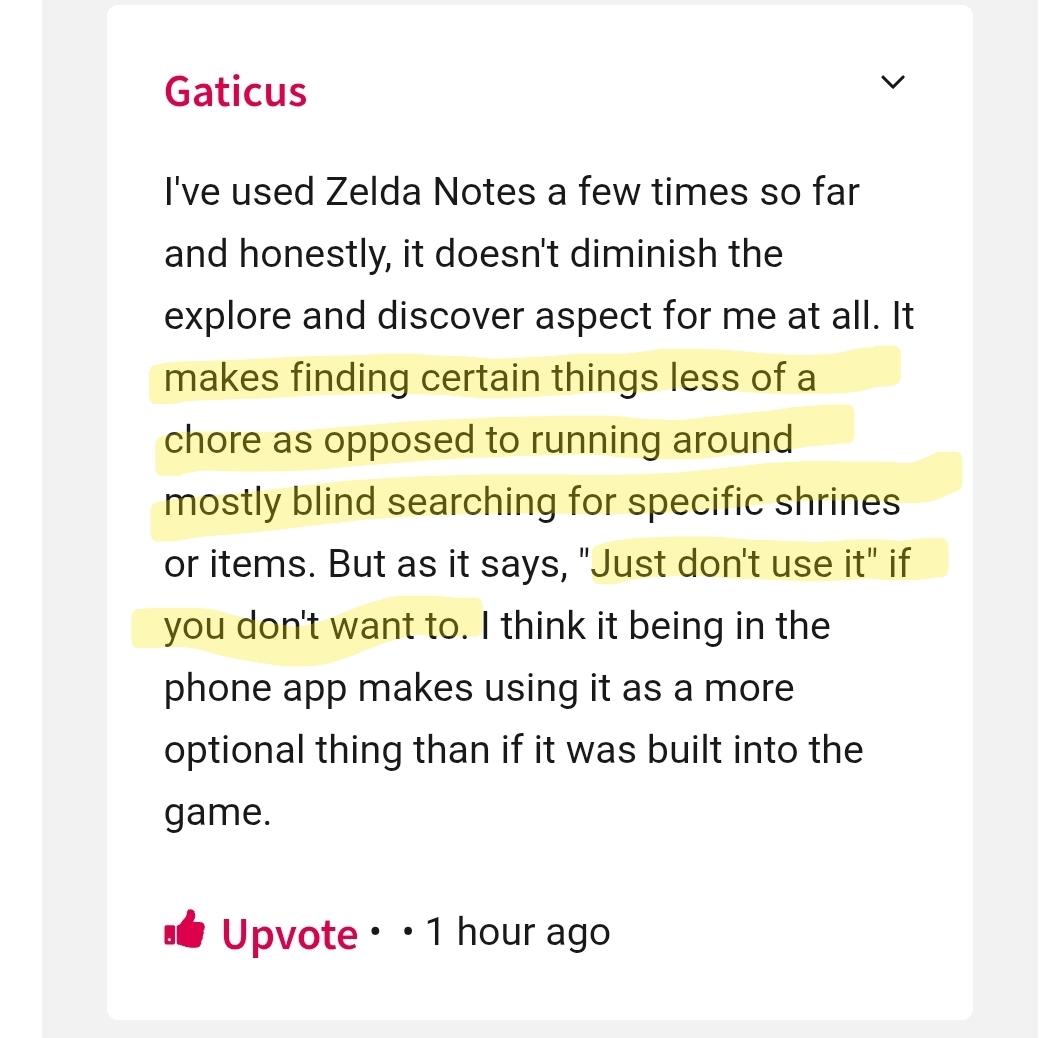 For simplicity’s sake, I’ll also just paste the comment here:
I’ve used Zelda Notes a few times so far and honestly, it doesn’t diminish the explore and discover aspect for me at all. It makes finding certain things less of a chore as opposed to running around mostly blind searching for specific shrines or items. But as it says, “Just don’t use it” if you don’t want to. I think it being in the phone app makes using it as a more optional thing than if it was built into the game.
If you’ve followed my work at all, you may already see what made me stop and shake my head, but in case you’re new here, this person says two extremely fascinating things that most people are going to just ignore. This person describes the experience of playing Breath of the Wild as “a chore” involving “running around mostly blind.” So let’s start by looking at this line:
It makes finding certain things less of a chore as opposed to running around mostly blind…
It’s all well and good that there is an app to fix this. Actually, scratch that–it isn’t “well and good” at all. These Zelda games (I can’t for the life of me remember if the article is about Breath of the Wild or Tears of the Kingdom, and it doesn’t matter anyway, so I’m definitely not going to bother to check the article) received a mobile app called “Zelda Notes,” so it is fundamentally no different from using a strategy guide, which takes discovery and exploration out of the equation entirely. It also requires a second device, and we can’t just ignore the fact that whipping out a second device is the least immersive thing that can be done other than turning the game off. The app is also unavailable for the Switch 1 versions, even though there is no good reason for that and it could easily be made to work with the original versions that so many of us already paid for.
Of equal concern is the fact that we have allowed anything at all into our games that could be described as “a chore.” Games are meant to be fun. You know what’s not supposed to be fun? Doing chores.
So here we have game design that is a chore to slog through, and Nintendo, several years later, releases something that makes it a little less tedious. On the surface, this seems fine, other than the previous points I made against it, but there is also the fact that it breaks what is otherwise a delicate balance in the game’s ecosystem, just like Amiibos did.
Struggling to find decent weapons? Just scan an Amiibo! The Zelda Notes app performs similar functions each day, such as repairing weapons or providing the same effects as a meal. Despite all the tedium of Breath of the Wild‘s exploration, it actually is finely balanced, as players will learn when they take on the game’s Hero Mode or scan in a bunch of Amiibos.
And I hardly think “Deal with the chores or upset gameplay balance” is a dichotomy worthy of one of the most esteemed franchises in video games.
I saw an article today that alleged that these two Zelda games are the true system sellers for the Switch 2, which is a take so sycophantic to Nintendo that I truly hope the author is at least coming up for fresh air occasionally instead of sucking it all directly from Nintendo’s ass. I would be genuinely impressed if Nintendo had conceived a way to make these Zelda games so improved on the Switch 2 that it justified the purchase of a $450 console, and you may think, seeing headlines like that and hearing people discuss how Breath of the Wild is the best game on Switch 2, that Nintendo had made great, sweeping changes to the games for the new console. Of course, Nintendo did no such thing. We are talking about graphical updates, and nothing more.
Well, you also get access to the Zelda Notes app, for whatever that is worth.
Chores & Gaming
I’m from an era when video games were fun, and the thought of having chores in my games makes me a little nauseated. There is certainly a time and place for grinding and other tedious tasks that, in and of themselves, aren’t a whole lot of fun, though they generally lead to fun. Grinding out ten levels against enemies isn’t a blast, but since it makes me powerful enough to take on an optional boss, that’s fine. Besides, there’s no reason that the grind can’t be fun. No gaming task will be fun if it’s done fifty times in a row, but I certainly found grinding out money against the merchant in Renoir’s Drafts in Clair Obscur: Expedition 33 to be a lot more fun than grinding levels in Dragon Warrior on NES.
It warrants pointing out briefly that there is a difference between a character doing a chore and the player doing a chore. Milking a cow in real life is a tedious chore, but milking a cow in a video game could be entertaining. Breath of the Wild itself demonstrates this: IRL, cooking is a chore (as much as I enjoy cooking), but cooking in Zelda involves choosing a few ingredients and watching a little animation. Watching the animation is the only part of it that is a chore, and it gets really annoying if you have to make a bunch of meals, because the first second or two of the animation simply can’t be skipped.
I have never milked a cow, but I can picture having to do so in a video game. It could be something like there being four udders, and the player has to click on them as they fill up, without letting any get too full and without squeezing them before they overflow. The fact that milking a cow in real life is a disgusting and unpleasant task doesn’t mean the video game that involves milking a cow has to be disgusting and unpleasant. In fact, the video game version shouldn’t be disgusting and unpleasant; it should be entertaining.
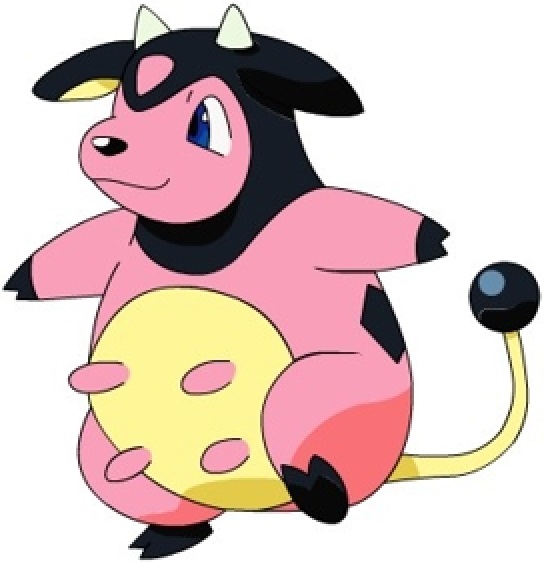
Just look at it. I hate this thing. Udders flopping around. Gross.
It shows a level of confusion that I’m not generally accustomed to dealing with. The notion that a chore done in a game is at all analogous to a chore in real life makes no sense. Can a character in a game be angry without the player being angry? The answer to this is so obvious that it never occurred to me to write it, but yes, an angry character in a game doesn’t mean the player is angry.
I have, in fact, had the brilliant and fun game Stardew Valley brought up in this regard, because it is a game where the gameplay is pretty much entirely just doing what would be considered chores in real life. But note that playing Stardew Valley is fun; playing Stardew Valley does not feel like doing chores, because the player is not doing chores–the player is playing a game, and the character is doing chores. On the other hand, when you log into World of Warcraft to do your daily heroic dungeon, then you, the player, are doing a chore, even though the character isn’t. The character is tearing through a dungeon and fighting for their life (more likely, exterminating enemies like they were roaches), and the player is doing the video game equivalent of washing dishes.
Just check out this article from Games Radar, where the author praises Bravely Default: I Don’t Know or Care Which One for allowing him to put the game on auto-battle at 4x speeds. Clearly, he finds the game to be a chore–so much so that he isn’t even playing it; he is literally watching passively as the game plays itself.
I tried so hard to get into Baldur’s Gate 3. On my second attempt to buckle down and give it a chance, I ended up in a battle against about a dozen or so goblins, and I was helped by 4 or 5 NPCs. At that time I believe I controlled 3 characters, so only 3/16 of the characters were under my control. I proceeded to watch Baldur’s Gate 3 play itself for several minutes, and every minute or so it gave me the chance to move and take a single action. I remarked to my fiancée, “I hope the game is having fun playing itself, because I’m not having fun playing it.”
This was the Game of the Year for 2023.
I can write off most of it as a stylistic difference–it just isn’t a style of gameplay that I enjoy. I enjoyed it once upon a time–Tales of the Sword Coast and Shadows of Amn brought me a lot of fun in my youth. But I can’t say the same for BG3. It was tedious and dull, with characters that often seemed like they are trying too hard to be fantasy tropes. And the awful combat, on top of spending way too much of the combat watching the game play itself, put it forever in my Trash pile.
The mentality from Games Radar infects gaming everywhere we look. It’s in this innocuous thread on Gamefaqs. It should be obvious, but if people are viewing collectibles as mere numbers (collectible #52, #78), then they’re not interested in the collectibles themselves. He doesn’t want Luigi with a shaved face or whatever, and he doesn’t want the green shell sticker. No, he just wants to check everything off a list. The experience of climbing Everest is meaningless; he just wants to be able to say he did it. The collectibles could just as easily be boring, monocolor flags with numbers on them from 1 to 200, and he would be compelled to go out and get them.
This is what I call Checklist Gaming, and I want to warn you that you may not want to read on. Once you are aware of Checklist Gaming, you’ll begin seeing it everywhere, and you’ll very quickly realize that not only are most games about as fulfilling as an Excel spreadsheet, but gamers clamor for these types of games.
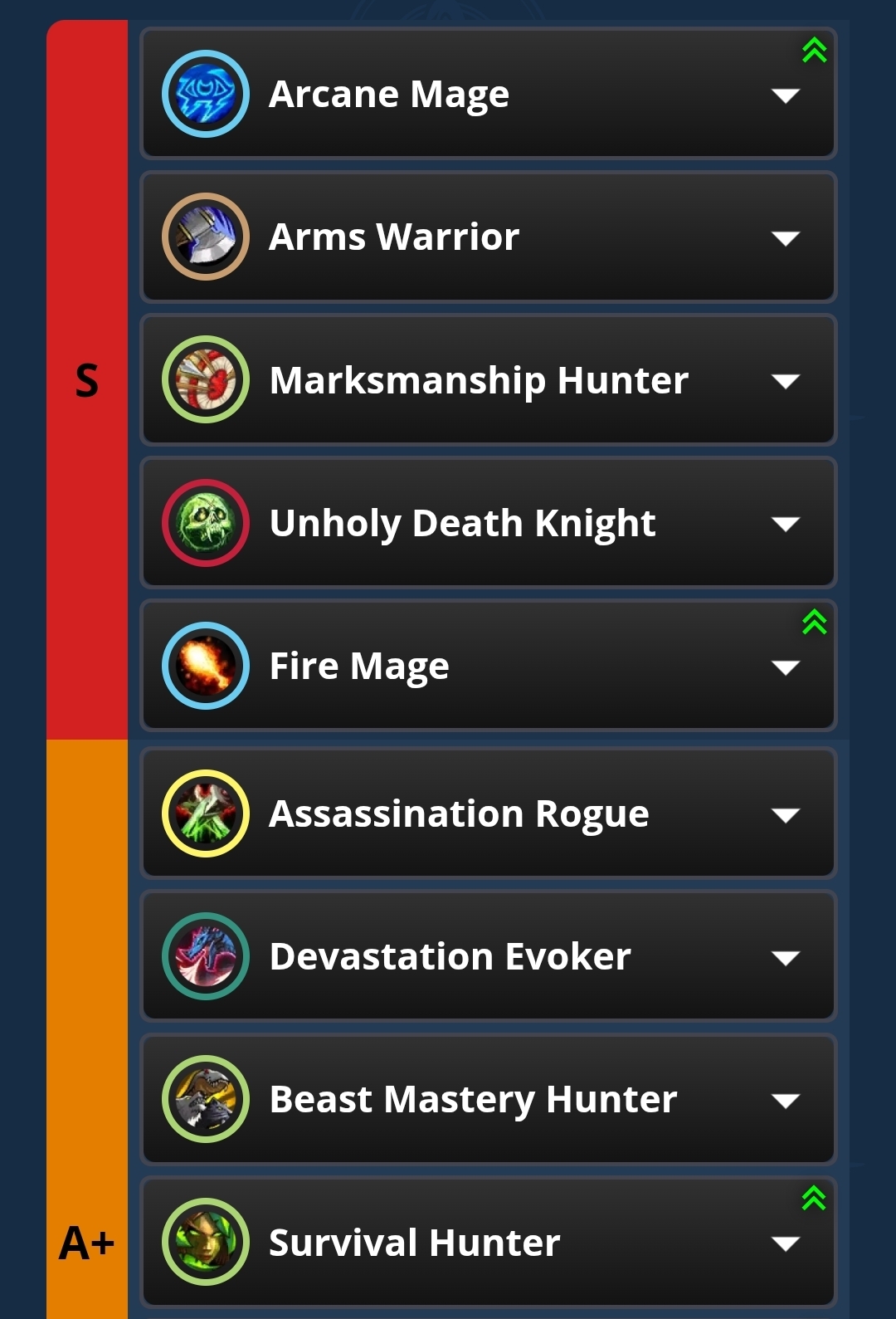
Earlier today in a response to me, someone made the assertion that players of Eve Online absolutely love min-maxing and spending dozens of hours grinding things out for slight improvements. It certainly seems that way at a glance. There are forums filled with players discussing the meta of any game you can find, and World of Warcraft players continue to obsess over what DPS is best at the highest tiers, even though the vast majority of those players will never be impacted by the fire mage rotation having 12ms less overall cast time than destruction warlocks, so that over a 100 second fight, fire mages have a 0.0012% advantage.
“This noob used Bowser’s aerial without L cancelling. Everyone knows Bowser’s landing lag is insane.”
“Why are you rolling affliction? Destro is currently top lock spec.”
I don’t mean to knock min-maxing and meta builds, because these are natural extensions of a player’s desire to be the best. It’s just human competitiveness at play, and as someone who has earned titles in World of Warcraft and who has earned the acclaimed title The Guy, as well as defaulting to playing most games on hard difficulty, I understand the drive to optimize.
The problem isn’t the optimization impulse itself—that’s natural human psychology that we probably can’t and shouldn’t try to eliminate. The problem is that this impulse has been weaponized by an industry that discovered they could turn competitive players into walking ATMs.
It is misidentifying what is happening to suggest that people love grinding for hours and hours to achieve a minuscule gain. The player enjoys min-maxing and getting the tiny little gain that gives him or her the competitive advantage, however minor that advantage is. It’s the same reason that baseball players wear cleats–if an advantage can be gained, then competitive players want it. In real life, though, everyone will ultimately get it (just like every professional baseball player wears cleats and uses a glove to catch the ball), and it will no longer be an advantage. However, at that point, not having it becomes an obvious disadvantage.
Psychologically, working toward something and then achieving it gives a nice little dopamine reward, and this is what players want–baseball and video game players alike. In the case of video games, especially nd MMOs, players are chasing after the result; they need Odin’s Jockstrap for their character, because it provides the extra 17 points in Haste that they need to have every box checked off.
You’ll notice that the baseball cleats analogy breaks down here, because there is a plateau to baseball equipment. Once a player has cleats, a glove, and a bat, that’s pretty much it, they’re good to go. But this is of the utmost importance, because it is exactly where this analogy breaks down that the psychological manipulation and exploitation happen. Running out and buying the new Nikes isn’t really going to make someone better at basketball, but running out and getting Thor’s Lost Toenail, which provides 10,732 attack power instead of the 10,689 attack power that the old “best in slot” weapon provided, will make the video game player 0.003% more powerful. Video game developers can always add a new weapon, helmet, sock, or pair of underwear for players to get for marginal increases to power.
A person taking a casual look at all these players undertaking these massive grinds and telling everyone how necessary it is, how great it is to have that extra 0.7% damage, could very easily walk away thinking that the players actually love grinding for weeks to get minuscule gains, but that is like watching a person drive to work every day and concluding that the person likes driving. It is just a means to an end, and there’s a good chance they hate grinding for the reward or hate driving.
It’s the same reason that players don’t know what to do with Clair Obscur: Expedition 33 and are demanding a checklist for Mario Kart World. One has to ask why in the name Master Chief does someone want to collect 200 of some thing that they don’t care anything about? They don’t want the stickers, and they probably have never used one of the game’s stickers. There isn’t one or two cool stickers they want, and they aren’t going after the stickers because the stickers are awesome and the player is worried about not getting them all.
At a glance, you might think those players love the stickers, and absolutely love hunting them down. This cannot be the case, though, as just by reading what they said, we can see the stickers might as well just be numbered flags.
What this person wants is a checklist, so that they can collect all the stickers and then get the sense of satisfaction that comes with looking at the checklist and seeing every box checked. They don’t want the stickers. They don’t want to explore the open world. They don’t want to go out and find cool things. They want to go from A to B to C all the way to Z until every box is checked off.
Game complete, 74% efficiency in gameplay to collectible ratio, next game!
You may be wondering why in the hell developers of single player games would care whether you play for 5 hours or for 50 hours, especially Mario Kart World, which, as of yet, has no DLC or microtransactions. Sadly, a player with 50 hours in a game is far more likely to buy its Booster Course Pass, even if those 50 hours were mostly spent grinding out pointless collectibles, because the player will make the same assumption that others make: “I played it a lot, and it felt good to get gold trophies in every cup and see my checklist completed. Therefore I must have had fun, and should definitely get the DLC.”
The Birth of Psychological Exploitation
It came about during the rise of MMOs, when developers realized that they could turn these users into money. Players would feed into it themselves, demanding each other have the extra 0.06% DPS boost, and then developers could and did set up systems where getting that 0.06% extra DPS took two dozen hours of gameplay, which meant another month of subscription fees.
You may be inclined to argue that this actually begin in the arcades, when gaming companies would do very shady things to make sure the players kept feeding the machines quarters. While this behavior is predatory, it is of a different nature from the exploitation of psychological traits we see today. Arcade machines had only one trick in their kit: unfair difficulty. Unfair difficulty doesn’t factor much into ensuring that players stick around for another month of World of Warcraft raids. Players are beating the raids regardless, because they are generally easy, so why do players continue to push on for better gear and a 1% increase to damage? I think it is more revealing that, despite the relative ease of the gameplay, and the well-known fact that maximized damage isn’t necessary to complete any of the content, players continue grinding anyway.
Modern gaming has a different way of enticing players to drop quarters, and it is brilliant in a completely sinister way: Create content that requires marginal improvements to complete (or convince players it does), make those improvements time-consuming to obtain, let the player community police itself—they’ll demand everyone has the “optimal” setup—and then profit from the extended engagement time.
The genius is that players think they’re being “hardcore” or “competitive” when they’re actually just paying more subscription fees to chase meaningless decimal points. The community becomes the enforcement arm of the monetization scheme. Players started enforcing these arbitrary optimization requirements on each other, creating a social pressure system that developers could then monetize indefinitely.
The Infection Spreads
Once that psychology was established in MMOs, it spread like a plague through the entire industry. Now single-player games have achievement systems, battle passes, daily challenges—all designed to trigger that same optimization compulsion that MMOs perfected, even when there’s no meaningful competition or challenge involved. Look at Star Wars Battlefront 2, where EA literally turned competitive advantages into slot machine pulls. Want that 0.5% damage boost? Better start gambling with real money, or prepare to grind for 40 hours per character unlock. They took the MMO model of “pay to skip the grind” and applied it to a $60 retail game, then acted shocked when players called it what it was: predatory gambling targeting children.
Dead Space 3 represents perhaps the most cynical evolution of this exploitation. EA took a beloved horror franchise and infected it with microtransactions for crafting materials. Suddenly, a game about survival horror became a game about resource management—but don’t worry, you can always pay real money to skip the artificial scarcity they deliberately designed into the experience. They didn’t just ruin the game’s balance; they destroyed its entire emotional core by making players think about their credit cards during tense moments.
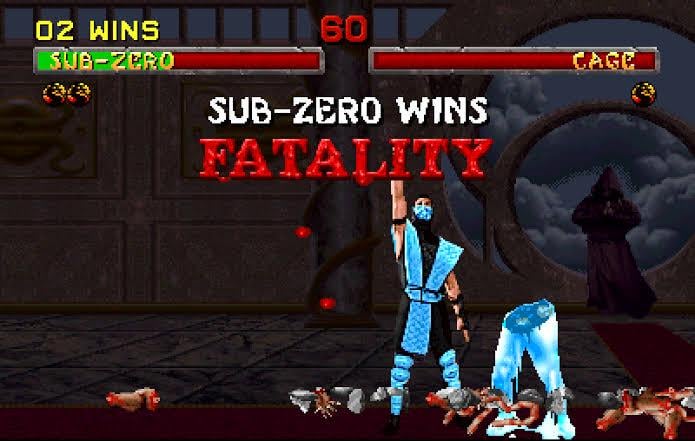
And then there’s Mortal Kombat’s “Easy Fatalities”—literally selling you the ability to perform moves that were designed to be learned through practice. NetherRealm looked at a core gameplay mechanic that had defined the series for decades and said, “What if we charged money for this?” It’s like Nintendo selling you the ability to jump in Mario, except somehow even more insulting because fatalities were supposed to be earned rewards for mastering the controls.
The Complete Corruption of Play
What these examples share is a fundamental disrespect for the concept of play itself. These companies have taken every psychological vulnerability that makes gaming enjoyable—the desire to improve, to collect, to master challenges—and turned them into revenue streams. They’ve studied behavioral psychology not to make better games, but to make more addictive spending mechanisms disguised as games.
The most insidious part is that it feels like player choice—”nobody’s forcing you to min-max!” or “just don’t use microtransactions!”—when the entire system is designed to make not optimizing feel like playing poorly. Players describing exploration in Breath of the Wild as “chores” because they’ve been conditioned to see any non-optimized play as inefficient, even in a single-player exploration game where efficiency shouldn’t matter at all.
This connects directly to why players can’t just “relax and have fun” anymore. An entire generation has been trained to value optimization metrics over actual gameplay enjoyment. The community polices itself, demanding that everyone chase meaningless improvements while the industry laughs all the way to the bank.
The Industry’s War on Fun
Let’s be absolutely clear about what’s happening here: the gaming industry has deliberately engineered systems to exploit natural human psychology for profit, and they’ve done it so effectively that players now defend their own exploitation. Companies spend millions studying behavioral psychology—not to create better gameplay experiences, but to identify new ways to extract money from addiction-prone personalities.
These aren’t accidents or unintended consequences. Every daily login bonus, every limited-time event, every battle pass, every “optional” microtransaction has been carefully crafted by teams of psychologists and data scientists whose job is to keep you paying, not to keep you playing. They’ve turned the joy of discovery into the compulsion to complete checklists. They’ve transformed the satisfaction of mastery into the fear of missing out. They’ve weaponized your competitive instincts against your own wallet.
When a game makes you feel like exploring its world is a chore that needs to be optimized with external apps, that’s not a failure of design—it’s a success of psychological manipulation. When you find yourself grinding for hours to get a 0.06% improvement you’ll never notice, that’s not dedication—it’s exploitation. When you’re paying real money to skip gameplay in a game you already paid for, that’s not convenience—it’s extortion.
Breaking Free from the Machine
The only way to fight this system is to recognize it for what it is and refuse to participate. Stop chasing optimization for its own sake. Stop defending companies that deliberately waste your time to extract more money. Stop letting algorithms and meta guides tell you how to have fun. Remember what games used to be: playgrounds for experimentation, worlds to explore at your own pace, challenges to overcome through skill rather than grinding or paying. Remember that you’re supposed to be entertained, not employed. Remember that the truly most efficient way to play a game is to not play it at all—so why are we trying to get as close to that as possible?
The industry is counting on your compliance. They’ve built trillion-dollar empires on the assumption that you’ll accept psychological manipulation as “just how games work now.” They’re betting that you’ll keep feeding quarters into their skinner boxes while telling yourself you’re having fun.
But you still have agency.
You can still choose to play for joy instead of optimization. You can still explore without a checklist. You can still refuse to pay for the privilege of skipping gameplay you already purchased.
The games industry spent decades learning how to exploit you. It’s time you learned how to fight back.
The first step is simple: Stop doing chores in your entertainment, and start demanding that your games actually entertain you.
Valid complaint .
Weeks of play time invested but no closure .