Getting Played: The $70 Content Lie

I used to be all woooo, but then I released a new video, and now I’m all weeeee again!

Walk into any game store today and you’ll see boxes screaming about “100+ HOURS OF CONTENT!” plastered across their covers. Open any gaming forum and watch people defend $70 price tags by calculating dollars-per-hour like they’re shopping for bulk toilet paper. The gaming industry has successfully convinced an entire generation that content equals value–and it’s the biggest lie ever told to consumers.

But here’s what they don’t want you to know: this isn’t just bad economics. It’s psychological warfare.

The Dead Theory Walking

The idea that a product’s value comes from the labor or materials that went into it has a name: the Labor Theory of Value. Karl Marx popularized it in the 1800s, and economists have been systematically dismantling it for over 150 years. Yet somehow, Nintendo, Sony, and Microsoft have resurrected this zombie theory to justify price hikes while making games actively worse.

Consider this thought experiment: I spend six months hand-crafting the world’s most elaborate buggy whip using premium leather and traditional techniques. By the Labor Theory of Value, this should be incredibly valuable; after all, I invested massive amounts of skilled labor and expensive materials. But in reality, it’s worthless. Nobody wants buggy whips anymore, regardless of the craftsmanship.

Value isn’t determined by input costs. It’s determined by what buyers are willing to pay based on their subjective assessment of worth.

This is basic economics that’s been settled science since the 1870s. Yet gaming companies keep pushing the dead theory because it serves their narrative perfectly. “Our game had 500 people working for 5 years!” they boast, as if any of that matters  when discussing the value of the game.

The Psychology of Getting Played

So why does this obvious fallacy work so well on gamers? The answer lies in several psychological biases that the industry deliberately exploits:

Anchoring Bias: When you see “100+ hours of gameplay!” on a box, that number becomes your reference point for value. Your brain anchors to that figure and uses it to justify the price, even though hours of padding aren’t equivalent to hours of quality.

Loss Aversion: Nintendo are absolute masters of this manipulation. Remember the artificial scarcity of Amiibos? Mario 3D All-Stars being “limited time only” for no technical reason? Mario 35 disappearing forever after a few months? They’ve weaponized FOMO to make you pay premium prices for products they could produce infinitely, but choose not to.

The Sunk Cost Fallacy (Applied Preemptively): Once you’ve paid $70 for a game with “100 hours of content,” your brain feels obligated to extract value by playing all of it, even after it stops being fun. The industry has weaponized your own psychology against your enjoyment.

Motivated Reasoning: You start with the conclusion that your expensive purchase was worthwhile, then work backwards to find evidence. “Sure, 40 hours were tedious, but I got 100 hours total, so it was worth it!” Your brain rewrites your own experience to protect your ego.

The Bloated Development Problem

Now, development costs do matter. Materials cost money. Paying developers costs money. These are legitimate business expenses that affect pricing. But in addition to the fact that a thing’s price isn’t necessarily equal to its value, the real problem is that the gaming industry has created wildly bloated development budgets by focusing on the wrong things.
Modern AAA games cost $100-200 million to develop. Where does that money go? Not into making games more fun. It goes into:

  • Photorealistic grass that players barely notice
  • Celebrity voice actors who phone in their performances
  • Marketing campaigns that cost more than development
  • Hundreds of employees creating padding content instead of focused experiences

Compare this to Clair Obscur: Expedition 33, which cost an estimated $30 million and delivers a complete, polished experience that respects your time. No padding, no artificial length extension, just quality gameplay from start to finish. These extraordinary qualities (which should be quite ordinary) marketed the game, as word of mouth spread its praises like syphilis.

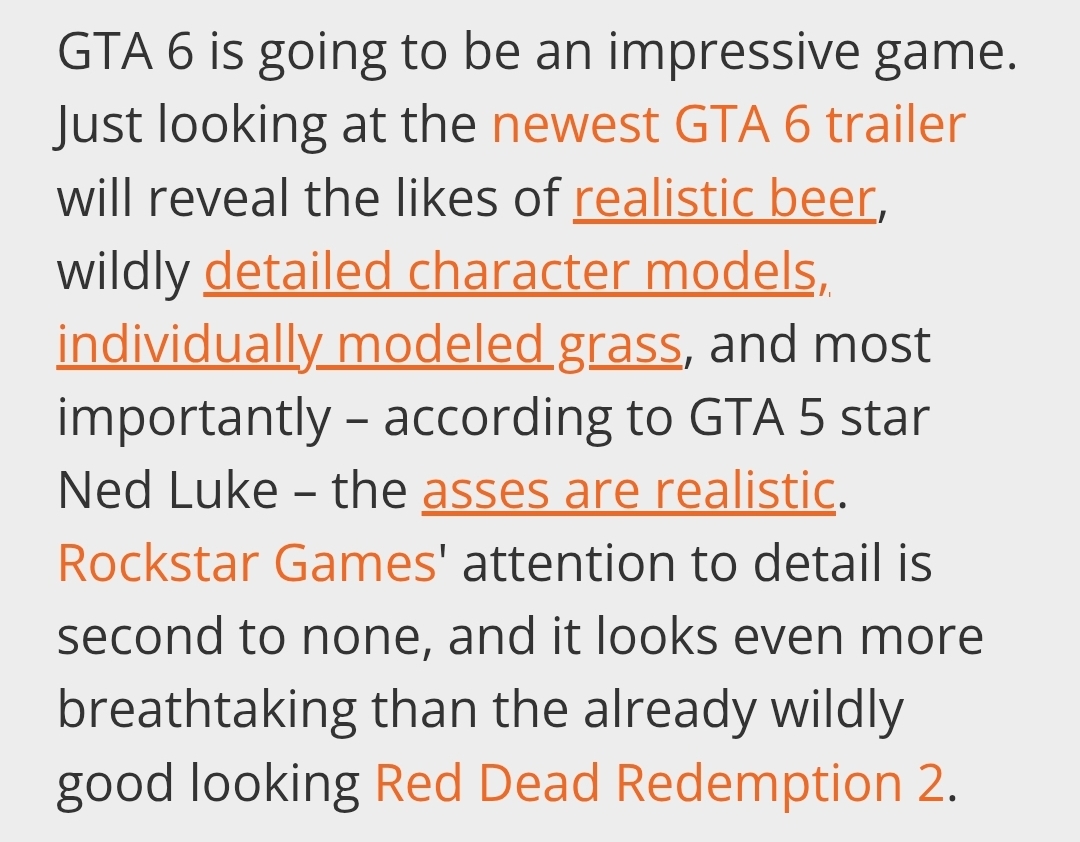
The issue isn’t that games cost money to make – it’s that studios have lost all sense of proportion and efficiency, then passed those inefficiencies on to consumers while pretending it’s about “content value.” Just look at the above screenshot, where Grand Theft Auto VI is being praised for individually modeled grass and freaking butts. Your next GTA will be more expensive because some pervy developer wanted to make coomer bait.

The Efficiency Paradox

Here’s the ultimate irony: modern games are designed to get you through them as efficiently as possible while simultaneously wasting as much of your time as possible.
Think about it. Why do games have quest markers, breadcrumb trails, and glowing objectives pointing you exactly where to go? If efficiency was bad for entertainment, wouldn’t these be considered design failures? The answer reveals the industry’s twisted priorities: they’re not optimizing for your fun, they’re optimizing for content consumption metrics.

The quest markers aren’t there to help you–they’re there to ensure you see all the “content” the marketing department wants to brag about. You’re being efficiently shepherded through a content consumption pipeline disguised as a game.

And here’s the psychological masterstroke: if the game escorts you through in a streamlined, tidy way, it’s less likely to feel like it’s designed to waste your time. The smooth progression creates the illusion of meaningful advancement, even when you’re just being led through elaborate time-wasting exercises.

When Fans Become Unpaid Marketing

The propaganda works so well that gamers now voluntarily spread it. I recently watched a content creator argue that Mario Kart World’s $80 price isn’t a cash grab because “they had a lot of passionate developers working on it for a long time.” He was literally peddling Marx’s Labor Theory of Value without even knowing it.

Then he defended the fact that nobody’s playing the game by saying Nintendo made it to sell the Switch 2, not to make a good Mario Kart game. Think about that logic. “It’s okay that the game isn’t good because it was designed to sell hardware, not provide entertainment.”

This is Stockholm Syndrome in action, defending a company that’s actively making worse products while charging more money.

Breaking the Spell

The most efficient way to play a game is to not play it at all. So why are publishers trying to get as close to that as possible with mindless padding while simultaneously rushing you through predetermined experiences?

Because they’ve confused consumption with entertainment.

Real entertainment should be the opposite of efficient. You should want to linger, explore, experiment, and get lost. When a movie is “efficient,” we call it rushed. When a vacation is “efficient,” you’ve missed the point entirely. Yet gaming has convinced us that efficient consumption of predetermined content equals value.

Every time you buy a game based on “hours of content,” you’re telling the industry that padding works. Every time you defend bloated games because they offer “value,” you’re enabling the practices that make gaming worse.

The Nintendo Hypocrisy Test

Want proof that Nintendo doesn’t actually believe content equals value? A few years ago, they charged $5 for Balloon Fight, a 1984 NES game with maybe 15 minutes of unique content. By their current reasoning (the reasoning they use to justify $80 games), Balloon Fight should have cost about 30 cents.

But Nintendo charged $5 because they knew people would pay $5 for the nostalgia and simple fun.

Value came from what the game meant to players, not from how much stuff it contained.

The same company that thinks a 15-minute NES game is worth $5 now claims their $80 racing game is fairly priced because of “content.” The hypocrisy reveals their true understanding of economics; they know content doesn’t determine value.

Demanding Better

Value isn’t determined by how much stuff a game has. It’s determined by whether that “stuff” is worth your time and money. A 5 hour masterpiece that changes how you think about games is infinitely more valuable than a 100 hour checklist that wastes your life.

Stop buying games based on content metrics. Stop defending padding as “value.” Start demanding quality over quantity. Support games like Hades, which provides hundreds of hours of evolving gameplay through smart design rather than padding. Support games like Vampire Survivors, which costs $3 and delivers more value than most $70 releases. Support games like Clair Obscur: Expedition 33, which avoids that nonsense.

Vote with your wallet. Show the industry that we won’t accept:

  • Games that waste our time with busywork;
  • Pricing based on debunked economic theory;
  • Content padding disguised as value;
  • Psychological manipulation disguised as game design

Your time is worth more than whatever they’re trying to sell you. Don’t let them turn your hobby into homework.

The gaming industry wants you to think like an accountant: hours in, dollars out, optimization everywhere. But games aren’t spreadsheets or rice at Costco. They’re experiences. And experiences can’t be measured by the pound.

What do you think? Have you fallen for the content trap? Share your thoughts in the comments below, and don’t forget to check out the full video analysis of this topic.
Getting Played: The Quest System

I’m creating a series of videos on my Under the Hood Gaming channel that is focused on the psychological exploitation and manipulation prevalent in modern game design, including single-player games where you ordinarily wouldn’t expect that sort of thing. The series was debuted earlier with a feature on the Quest System.

I’ve talked about the Quest System before, and I mentioned Dragon Age: Inquisition a lot, and it still breaks my heart that Inquisition was what it was, instead of being a masterful story experience about the war between the Chantry and the Mages (a war that took a backseat in Inquisition before being effectively resolved in a single quest). While I will have to truly get my heartbreak expressed one day, that isn’t today, and instead this video is about the Quest System.

There’s a moment in every gamer’s life when they realize they’re not having fun anymore—they’re working. Maybe it’s the fiftieth “collect 10 of X” quest in Dragon Age: Inquisition. Maybe it’s staring at a minimap instead of the beautiful world developers spent years creating. Maybe it’s that sinking feeling when you see a 99% completion rate and know you’ll lose sleep until you find that last collectible.

If you’ve experienced this, congratulations: you’ve discovered how modern game design has transformed players from adventurers into unpaid digital laborers.

The Birth of Digital Serfdom

The quest system epidemic didn’t start with malicious intent. Like many gaming disasters, it began as a practical solution to a technical problem. In 1999, EverQuest faced a challenge no one had solved before: how do you provide content for thousands of concurrent players without destroying your servers or requiring an army of writers?

The answer was the now-infamous [Action] [Number] [Object] template. Kill 10 wolves. Collect 15 herbs. Deliver 3 packages. These weren’t designed to be engaging; they were industrial efficiency made interactive. Fast food for the brain, served by algorithms instead of chefs.

World of Warcraft perfected this system after discovering that testing players constantly asked “what’s next?” The solution proved to be quest chains that constantly guided the player, and predictable rewards, essentially turning the game into a sophisticated task management system, complete with Pavlovian conditioning. It worked brilliantly—for MMORPGs dealing with massive populations and technical constraints.

The problem came when single-player games started copying these systems without understanding why they existed in the first place.

The Great Contamination

Between 2010 and 2015, something catastrophic happened: developers began importing MMO mechanics wholesale into single-player experiences. Games that should have been carefully crafted adventures became checklist simulators, trading meaningful exploration for content volume metrics.

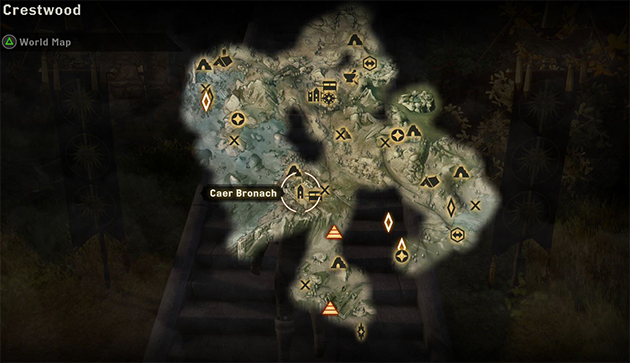
Dragon Age: Inquisition became the poster child for this contamination. BioWare, reacting to criticism about Dragon Age II‘s reused environments, decided bigger was better. Instead of handcrafting content, they imported MMO design: vast zones with sparse content, fetch quests requiring multiple collectibles, and a “Power” currency that forced players to complete side quests to progress the main story–and to wait many real-life hours, exactly like the garrison missions of World of Warcraft.

The result was what players immediately recognized as a “single-player MMO”—a game that felt designed for multiple players but trapped you in solitary digital labor. Maps became to-do lists filled with quest hubs and littered with quest objectives. Exploration became all about optimizing efficiency.

Adventure became work.

Even Nintendo, once the masters of tight game design, fell into this trap. While Breath of the Wild mostly got exploration right, they looked at their success and thought players wanted more collecting. Enter Tears of the Kingdom with its device hoarding mechanics—because apparently Link’s greatest adventure is becoming a digital packrat.

The Psychology of Exploitation

The most insidious aspect isn’t boring gameplay—it’s how these systems exploit fundamental psychological mechanisms. Modern quest design leverages principles that make gambling addictive and workplace surveillance effective. To be fair, the gameplay usually is boring: since it relies on exploiting innate psychological traits to drive engagement, they don’t have to be entertaining. Being fun becomes superfluous, because players will do it whether it’s fun or not, simply because they need to check the item off the lost.

The Zeigarnik Effect explains why unfinished tasks stick in memory more than completed ones–your brain literally can’t let go of unchecked boxes. Game developers exploit this by creating infinite task lists—every objective cleared spawns more map markers, every quest completed unlocks three more. It’s psychological quicksand.

Completion Anxiety triggers when you see percentage meters. That 97% completion rate? Your brain interprets that missing 3% as a personal failure, creating genuine stress that won’t resolve until you find every collectible. It’s weaponized perfectionism.

Cognitive Offloading occurs when external systems replace internal thinking. When games provide minimaps and quest markers, your brain stops creating mental maps. You become dependent on UI to navigate, like using GPS so much you can’t find your way home without it.

Compare this to Clair Obscur: Expedition 33, which deliberately has no minimap. Players must “actually pay attention to the environment” because developers trusted them to navigate like human beings. The result? After 120+ hours, I’m still discovering details in areas I’ve visited dozens of times. When games don’t spoon-feed objectives, you engage with the world instead of clearing it like a to-do list.

The Minimap Menace

Perhaps no mechanic better illustrates these problems than quest markers and minimaps. These systems fundamentally alter how players interact with game worlds, reducing rich environments to waypoint connections with everything between treated as obstacles to efficiency.

Try playing any modern Zelda game without the map constantly open—you’ll realize Hyrule is basically identical hills with copy-pasted trees. Compare this to Morrowind, which provided detailed directions: “Go along this road, till you pass the big oak, we call it ‘Widow’s Oak’… Right past it, go right, go along the small pathway until you see some rocks.”

Modern games simply update your UI and call it navigation. It’s like having conversations through PowerPoint presentations.

The Standardization of Wonder

The real tragedy isn’t just individual boring games—it’s that entire genres converging on identical templates. The “Ubisoft Tower” became synonymous with lazy open-world design: climb structure, reveal map icons, clear markers mechanically. Even when Assassin’s Creed creator Patrice Desilets apologized for unleashing towers on gaming, it was too late—the template had metastasized.

Nintendo looked at Ubisoft’s formula and decided it needed more grinding, scattering shrines across Hyrule like someone sneezed collectibles onto the map. At least Ubisoft’s towers were visible from a distance. Nintendo made you hunt for content like digital Easter eggs containing disappointingly similar puzzle boxes.

This standardization eliminates genuine surprise. When you know that noteworthy encounters only appear at points of interest, exploration becomes predictable pattern recognition rather than authentic discovery. Players develop metacognitive expectations that shape how they approach all games, training them to think of virtual worlds as productivity software rather than spaces for imagination.

I recently bought the RoboCop game because it was on sale for $5, and I quit less than ten minutes in, because this was a first-person shooter, and it had just given me a Quest that I could view by pressing L, which was broken down into other objectives that would populate as I completed them, and the game helpfully provided a Skyrim-like compass at the top of the screen pointing me exactly to where I needed to go. Don’t explore, don’t look around, don’t play a game–just follow this series of breadcrumbs to where the developers want you to go. No thought needed! 

When our first-person shooter plays and acts like Skyrim, it foretells a major problem in gaming: this homogenization means every game is increasingly like every other game. RoboCop might as well be Skyrim, but the dealers are putting out Nuke instead of Skooma.

The Resistance

The encouraging news is some developers have recognized these problems and pioneered alternatives. Breath of the Wild revolutionized open-world design by using towers to reveal terrain without populating maps with objective markers. Players must manually scout points of interest, fundamentally changing how exploration feels. Clair Obscur: Expedition 33 bucks all of these homogenous trends to create an experience that is engaging because the gameplay and story are compelling, rather than because of innate psychological weaknesses.

Alternatives prove engagement doesn’t require exploitation. Games can trust players to explore organically when designed for intrinsic rather than extrinsic motivation.

Reclaiming Our Agency

The quest system epidemic represents a broader crisis in interactive entertainment. When games prioritize retention metrics over player satisfaction, completion rates over genuine engagement, and behavioral manipulation over creative expression, we lose something essential about what makes play meaningful.

We’ve turned the medium that should celebrate human agency into sophisticated mechanical operations, transforming players into digital pieceworkers measured by productivity metrics and completion percentages rather than experiential richness.

But recognition is the first step toward recovery. The success of games like Clair Obscur: Expedition 33, Outer Wilds, and Elden Ring suggests audiences hunger for authentic exploration rather than sophisticated task management.

The next time you boot up a game and see a map covered in objective markers, ask yourself: Am I playing, or am I working? Am I exploring a world or clearing a checklist? Am I having an adventure or performing digital labor?

The answer might surprise you—and change how you think about the games you choose to play.

Gaming can be more than sophisticated behavioral manipulation. It can be a space for genuine discovery, meaningful choice, and authentic play. But only if we recognize the difference between games that respect our humanity and games that treat us like expensive lab equipment designed to generate engagement metrics.

The choice is ours. We just have to remember that we’re players, not products.

For more analysis of how the gaming industry exploits player psychology, watch the full “Getting Played: The Quest System Trap” video and subscribe to Under the Hood Gaming.*

Nintendo is Peddling Bullshit—And Gaming Media is Complicit

We’ve just launched our new channel, Under the Hood Gaming! After existing for a few days, we’ve published our first video examining the psychology behind modern gaming practices. While we plan to post on Odysee as well, that’s a future project—our director is juggling multiple tasks right now, but it’ll happen within the next few weeks.

Your support would mean everything to us: subscribing to the channel, watching the video, and leaving likes, comments, and shares all help tremendously.

This isn’t our first critique of the Nintendo Switch 2 and Nintendo’s practices. I covered many of these issues in written form a few weeks ago, but the video adds new information and context. Plus, you can listen while doing dishes or commuting to work.

Why Gaming Content on an Anarchist Network?

This marks LRN’s expansion beyond talk shows into other content areas. After all, anarchist principles don’t require anarchist-themed shows exclusively—our values naturally emerge in our work, just as Stephen King’s progressive views appear in his novels without dominating them.

But how does a gaming channel fit an anarchist network? Liberty takes many forms. Beyond freedom from fear of death (which we’ve discussed on Free Talk Cast), we need freedom from psychological manipulation and the freedom to genuinely enjoy life. Modern gaming companies exploit psychological vulnerabilities for profit, and that’s worth examining.

Why I’m Criticizing Nintendo

You might wonder why I’m so critical of Nintendo lately. Ironically, it’s because I love Nintendo and want them to be the best gaming company, not the most exploitative. I want them to stop phoning in their game design for the same reason a parent would be frustrated watching their gifted child half-ass a piano recital.

Nintendo used to be the only company I’d buy from on launch day—I trusted their quality completely. I didn’t hesitate to pay $70 for Tears of the Kingdom. But somewhere along the way, I lost that trust.

Was it Skyward Sword HD for $60? Link’s Awakening selling for more than twice its original price despite running poorly? Echoes of Wisdom feeling overpriced at $60? Even Super Mario Wonder, which sounds excellent, feels like it should be called “New Super Mario Bros. 3″—and I can’t justify $60 for a 2D platformer that takes under 10 hours to beat.

The Content Pricing Contradiction

Nintendo claims games are priced according to content, but their pricing is wildly inconsistent. If Mario Kart World costs $80 because of its content volume, how did they justify selling Ice Climbers for $5? How are Super Mario Party and Super Mario Odyssey the same price as Paper Mario: The Thousand Year Door?

Nintendo must either price games according to content or not—they can’t claim one thing while doing another. Well, they can, but we should call out their bullshit.

The Media Problem

Gaming media seems complicit in this. They want to maintain access to review codes and exclusive interviews, so they soft-pedal criticism. I’ve seen sites describe Mario Kart World’s open world as “big and empty, with nothing to do” and then call it “wonderful” in the same paragraph.

Games media did criticize Welcome Tour for not being free, but this felt like a softball Nintendo threw deliberately. Having spent time in federal prison, I learned that when authorities are searching for something to criticize, you give them something minor to find so they don’t discover what really matters. Nintendo gave gaming sites Welcome Tour to critique while the real issues went unexamined.

I’m not claiming conspiracy, but the pattern is troubling. When gaming sites praise 5-year-old and 2-year-old games (Breath of the Wild and Tears of the Kingdom) as reasons to buy $450 hardware, that’s impressively out of touch with reality, and it suggests a bigger underlying problem with criticism not being directed at Nintendo. I’m financially comfortable, but I won’t pay that much to replay games I’ve already completed, even with minor improvements. The thought of buying new hardware to play graphically improved versions of games I’ve already paid (and paying extra for the improved versions!) is inherently gross to me, and games media spouting that justification feels like attempting to fleece gamers.

The Replay Problem

This highlights a broader issue. I’ve exhausted Pokémon Scarlet after 250 hours—competitive battling, perfect IV breeding, EV training, raid farming, even buying Violet for exclusives. There’s nothing left for me to do.

The same happened with Tears of the Kingdom after 112 shrines and 97 light roots. I started a second playthrough but quit after the second dungeon because nothing was different. Everything I did in the second run, I’d done in the first, but without the excitement of discovery. I’ve gotten a little more replay value from Breath of the Wild, but that’s because I skipped so many of BOTW’s shrines in my first two playthroughs.

I’m looking for new experiences. I’m sorry, but I’m not looking to play through Ocarina of Time again. And I’ve still got a Wii U, so if I want to play The Wind Waker, then I’m going to play its improved version, not the GameCube emulated version (by all accounts, Nintendo’s GameCube emulator is also pretty bad).

Upcoming Content: The Quest System Trap

Our next video, “Getting Played: The Quest System Trap,” examines how modern games have reduced exploration to following waypoints. You go somewhere because there’s an icon on your map. An NPC gives you a quest, you press L for your quest log, M for your map, and follow the waypoint to kill the enemy with the quest icon.

Why are you doing this? Who knows? And do you care anyway? The NPC probably explained, but there’s no reason to pay attention when the game provides all necessary information through UI elements.

This isn’t just nitpicking. Information processing used to be required for games, contributing to brain development through spatial modeling, problem-solving, and navigation skills. When games do this work for players—called cognitive offloading—we lose these abilities and become more dependent on automated assistance.

Animals play to hone survival skills. Humans do the same, developing alertness, coordination, and threat awareness. Video games traditionally served this function, but increasingly they reduce player involvement to mechanical actions while handling all information processing automatically. The result feels more like filling out a spreadsheet than engaging in meaningful play.

The Path Forward

Games can be better than this. As Clair Obscur: Expedition 33 proves, games can offer rewarding, enriching experiences that enhance our lives rather than just providing cheap dopamine hits from checking off items on a list.

Review: Clair Obscur: Expedition 33

Stop reading this. Go buy Clair Obscur: Expedition 33, and then come back and read this while the game is downloading and installing. It is also available via XBox GamePass, but I implore you to buy it instead, because games like this don’t come along often, and, when they do, I’d rather see the creators rewarded. I’d also like to see the publishers rewarded, as they were reportedly cool with postponing the game when necessary, and never forced crunch onto the developers. The game released complete, with no plans for DLC, no content removed for Day One DLC, and in a remarkably solid state with few, if any, bugs at all, much less major ones.

These alone are sufficient to buy the game in the modern industry, because the above paragraph is the exception rather than the norm. Crunch is common, games are frequently rushed, games are released in varying degrees of broken, and content is regularly cut from games in order to release it as DLC, and season passes are almost ubiquitous. Clair Obscur deftly avoided all of these problems, shining as a glorious example of how things should be, and was created by a team of passionate people.

And the passion shines through from the moment the game launches. From the wonderfully stylizes user interface to the varying music that accompanies the player throughout, it is immediately and continuously clear that love went into this game. The graphics are gorgeous, yet not simply realistic; there is also a style about them that is distinct, which is fitting for a game that is named after a painting style. Even the standard environments have twists and features to them that make them unique–you have never traveled through a city quite like Lumiere, and I don’t need to know your gaming history to be confident in that statement.

There is a huge variety in environments across the game, and they are all breathtaking. They also all lack a minimap, which many players have derided as causing tedious backtracking, but this is only true for players who haven’t yet learned the rules of the game or who were unwilling to adapt to them. Unlike Final Fantasy X, players can’t simply navigate a yellow triangle on a blue plane and must actually pay attention to the environment. This was a deliberate choice by the developers–in Final Fantasy X and similar games, developers expend tremendous resources making beautiful scenery, only for it to be completely ignored because navigation is confusing and obtuse, leading players to focus entirely on the minimap.

Image credit: Kepler Interactive

This may sound like it makes the game more difficult, and it does… for the first major area. After that, players should have learned the rules of the game, which is to pay attention to surroundings, because every area is diverse, with clear, unique landmarks that make navigation easy; it just requires looking for them, instead of counting on linear paths or a minimap (or in the case of Final Fantasy XIII both a minimap and a horribly linear path).

With a game designed to not have a minimap, it isn’t a problem to lack one, just like a game that is designed to not have a jump button does not create a problem by lacking one. The people complaining about not having a minimap to stare at while they ignore the exquisite and fascinating world that the developers made are simply people who do not want to adapt to the new situation. They want to run from A to B without paying much attention, because that is how modern games have acclimated them.

Here is the objective marker on your map. You have a minimap in the top-right corner of your screen. We’ll put a glowing dot where the objective is, though it may be on the edge of your minimap if it’s too far away. Don’t worry about missing any side content–we displayed the side paths clearly on the minimap, so they can’t be missed. Also, here, we’ll go ahead and add treasure chest icons to the minimap. Also, here’s a quest log, complete with a checklist, just so you can be absolutely sure you didn’t miss anything. And if that’s not good enough, here’s a completion percentage also.

The above is how most modern games present themselves to players. In Clair Obscur, it is not only easy to miss side paths, for players who aren’t watching close enough, but there are optional bosses, useful items, and other worthwhile stuff hidden on the side paths. After a few areas, players should get a feel for how the designers went about hiding things, because there is a great deal of consistency and thought, but even late into the game it’s easy to miss an alcove that leads to something, or climbing pegs subtly placed on a wall.

I tend to be pretty good at video games, and I would encourage everyone to play through the same way that I did: without using a guide. Many people have cited a 30-50 hour playtime, and by my reckoning that is based on people playing on Story Mode (drastically reduced difficulty) while using online guides. I was at about 100 hours when I started New Game Plus, and I had come pretty close to 100%ing the game, I think–there is no completion percentage. It’s okay to get lost and poke around for a while; that’s kinda what it means to play a game. If, however, you’re one of those people who requires a checklist and quest log and minimap, and you cannot adapt to playing a game as a game instead of as a spreadsheet that needs to be filled out, then you may not enjoy Clair Obscur as much.

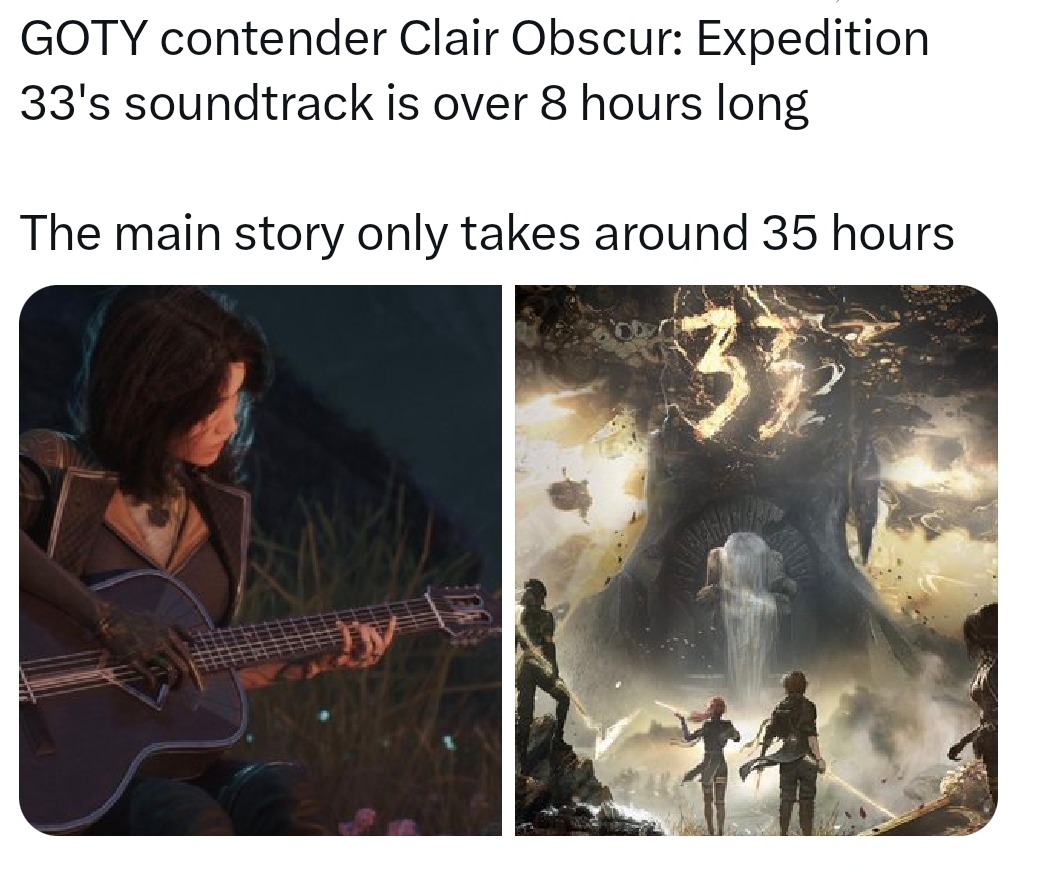
Visuals and an excellently designed world are not the only ways that Clair Obscur excels. The music is spectacular, and much of it features vocals, which is very unusual for a video game. However, now that I’ve heard it used so extensively during a game, I am left wondering why game developers continue to rely so heavily on instrumentals. Instrumental music was originally just a way to get around technical limitations in audio production–you couldn’t have singing with 8-bit bleeps and bloops. Even into the N64 era, singing wasn’t really possible, as including tracks with vocals on the N64 forced the Tony Hawk’s Pro Skater games to reduce the number, quality, and length of the tracks.

These limitations are no longer applicable. Games weigh in at 50 gigabytes and more, so a 3 MB mp3 file is trivial. Likely because of tradition, though, most music in video games continues to be instrumental, but this is decidedly not the case in Clair Obscur, which has some wonderful music. Through the entire game, only one track irritated me with its vocalizing, and that was in an optional area where someone spoke French through the song. It likely would have been less irritating if I could speak French, but I’ll confess to muting the music in that short, optional area.

Given how so much thought went into everything else, I have to think it was also deliberate to have such a great abundance of audio variety, as well. While all the tracks are great (except the one I found annoying), very few are repeated, and there are several different battle themes, which leaves very few of the songs actually being memorable, simply because they don’t play often enough to be. No matter how great a track is, if you only hear it once, it isn’t going to lodge itself in your mind. I suspect this was done to keep the music on par with the visuals and story, while ensuring that the visuals and story were the features that players remember most when they put the game down.

Obsession

Clair Obscur: Expedition 33 is the only game I have ever played that, if I was not playing it, I was actively thinking about it. This game had my attention in a way that no other game ever has, and I’m not alone in that assessment. There are many reasons for the obsession that possesses people when playing this whirlwind of a game, but the main reasons are the story and the characters. The game is so compelling that after the previous sentence, I stopped writing to go and play it, though I’ve already gotten 120+ hours in it.

I’m going to avoid spoilers as much as humanly possible, but no one ever feels truly safe throughout the story, and people die. This leads to some very surprising developments, where I asked a friend who was also playing, “They come back, right?” So few writers have the courage to do what Sandfall Interactive has done.

The obsession is real, and is owed to the intriguing characters, world, and story. Tremendous amounts of thought and effort went into the characters, all of whom have compelling motives and traits, with the possible exception of Lune, who is a fairly one-note character.

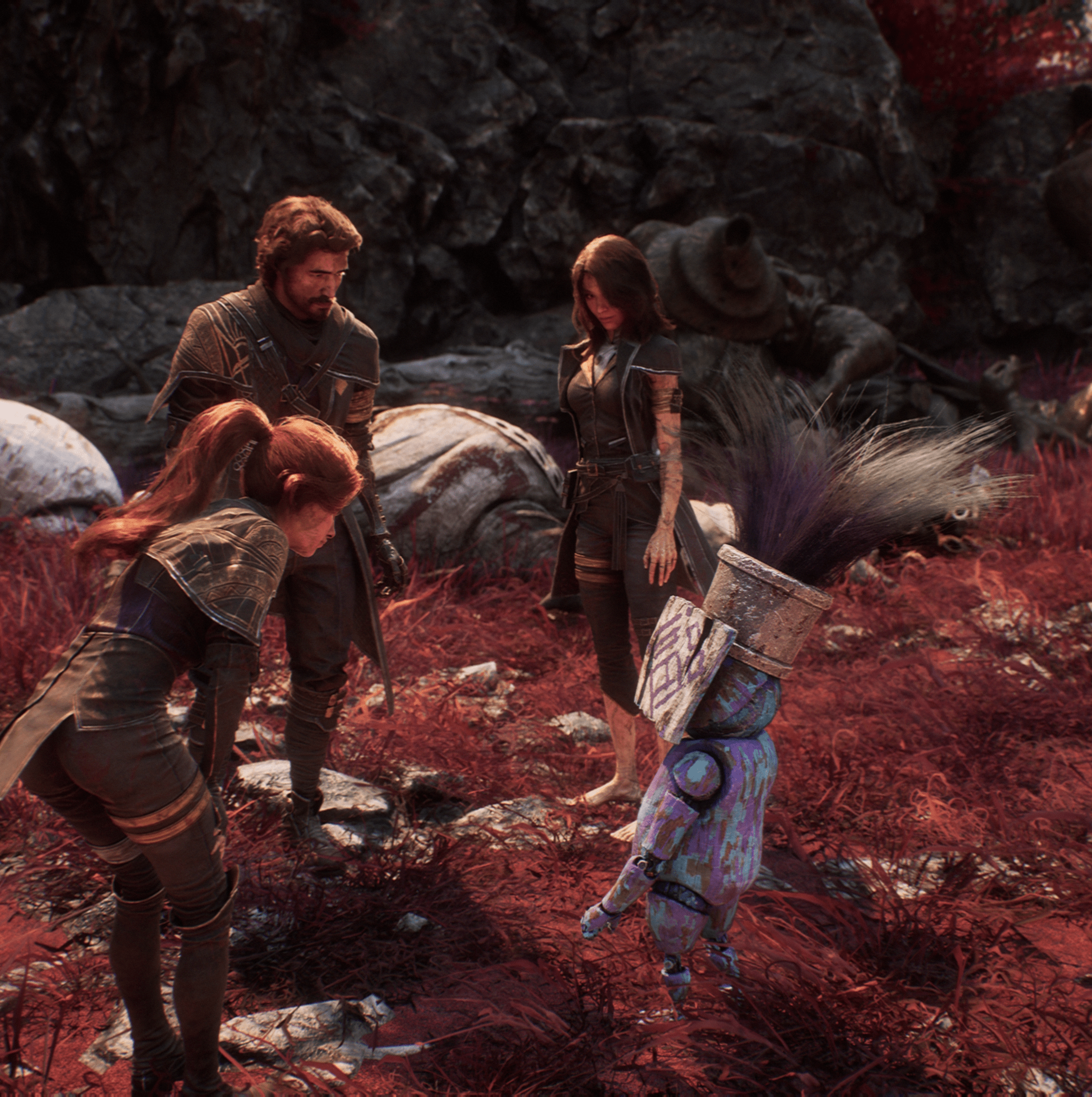
Esquie, while not actually a playable character, is a darling of the game, and I expected to find their mannerisms annoying based on what I read, but everything about Esquie proved endearing rather than irritating. Monoco at first was a character I didn’t think I’d like, but I discovered a great deal of depth within him, and was as captivated by him as any other. As a mage, Lune had the easiest path to my heart, and it really speaks to the strengths of other characters that by the middle of the second act I was tired of her and more intrigued by Sciel, whose tragic background puts her carefree and good-spirited character in a very different light. There is also Verso, who has the odds stacked heavily against him in terms of likability, but even he managed to win me over. Finally, there is Maelle, clearly preferred charger of the game and obviously the true main character, whose conflicts immediately propel the narrative forward.

There is so much more going on in this world than it initially seems, which is impressive, given that it is bustling with vibrance and intrigue from the start. The main enemy of the game is the Paintress–like a sorceress, except she paints. Not only does this make perfect sense in the context of the game world, but it also adds layers of interest to the creative masterpiece that is Clair Obscur: Expedition 33. Players are never bored, and it’s rare to actually feel like you have a solid handle on what is going on.

That said, Clair Obscur does not take its cue from the half-assed endings of American horror movies. Events actually get explained in a satisfactory way, although a few pieces of the story are merely alluded to, and the endings (of which there are two) leave players feeling a little uncertain about it all, especially concerning whether they made the right decisions. It is near the end of the game that the threads begin to unravel in a way that allows players to see the full canvas, and the revelations never feel unwelcome or completely unexpected.

Given that I’ve focused heavily on the story, you might assume that the gameplay is the lesser part of the package, but that would be incorrect. Clair Obscur: Expedition 33 borrows heavily from Final Fantasy X, and one clear inspiration is the combat. Like FFX, a turn order appears (although in the top-left of the screen instead of the right) giving players a clear understanding of what is upcoming in the turn-based fight. There is no half-assed, awannabe Devil May Cry here–it is truly turn-based, and the best take I’ve seen of the style since Bravely Default.

There are dreaded Quick Time Events, but they are not obtrusive or particularly destructive if players miss them. Nearly every attack features one or two, and nailing the timing increases the damage the character does by roughly 5%. Thankfully, it is always the same button needing to be pressed, and no attack has an obnoxious “Press A, then X, then Y, then X twice” QTE. Instead of feeling forced and grating, the QTEs are a minor but welcome addition to the combat.

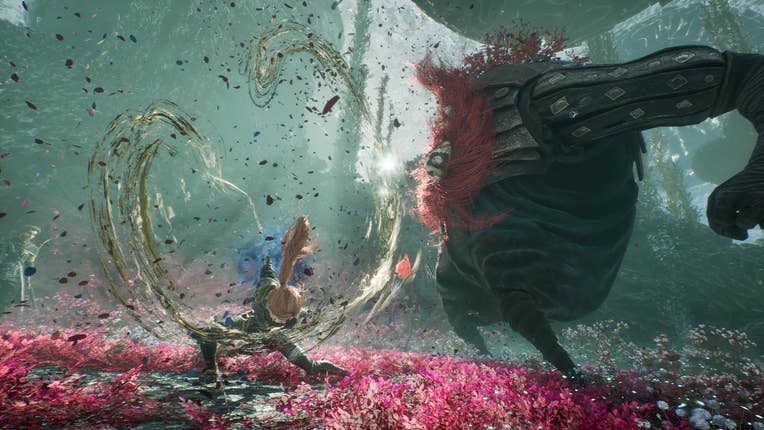
More importantly, players have the option to dodge incoming attacks, parry incoming attacks, and, occasionally, jump over incoming attacks. This is where the combat shines brightest. Windows to dodge attacks are more forgiving, and there’s no need to worry about whether to Dodge or Parry–both work for nearly any attack, with the only exceptions being enemy Gradient Attacks (which require a different button, but which are also obvious when the enemy uses one, as the game goes grayscale) and attacks that must be jumped over. Attacks that must be jumped start with a clear icon in the enemy animation, and attempting to dodge or parry will result in a hit to the characters. Jumping is easy, and by far the easiest way to counter attacks, as the counter window is fairly forgiving.

Dodging is easy, but parrying is how you win, because it comes with a free counterattack that hits much harder than a standard base attack. It is entirely possible to go through the game without ever taking damage, by mastering the parry mechanic. Audio and visual cues on parry timing are usually clear, but don’t interpret this to mean the timing is easy to master. A no damage run is definitely possible, but it will take a lot of practice, and don’t expect it to happen on your first (or first ten) playthroughs, even in Story Mode (what the game calls Easy difficulty).

Recent patches have made Story Mode easier, though I would recommend going through the game in its intended normal mode. The difficulty is masterful, and the difficulty curve is expertly handled. Enemies begin the game having a single, choreographed attack, but as the game progresses players will find themselves needing to parry, party, jump, and then parry again. It is also refreshing to reach a new area and encounter entirely new enemies, only to barely survive.

Difficulty in games can vary wildly, and can mean drastically different things. Difficulty in the original Resident Evil 2 meant carefully managing one’s resources across an entire playthrough, including the ability to save, and some games, especially RPGs, start out challenging and only get easier. Clair Obscur: Expedition 33 manages to be the rare JRPG that begins relatively easy, and actually gets more difficult. Enemies pick up more attacks per turn and their attacks become harder to parry.

It is the norm here to reach a new area and barely survive the first several battles while the player learns the new enemies and their attack patterns. On normal difficulty, it’s usually not enough to cause a game over, but, even if it does, a game over is a trivial setback, as the game will restart you just before the fight. Bosses, on the other hand, will cause party wipes, as they should.

Players shouldn’t easily defeat every boss they encounter. You’re supposed to die a few times while you learn the attacks and how to counter them. It always feels fair, and players will notice themselves improving against the new enemies and bosses, taking fewer hits and surviving longer. Many people seem to think that they should down every boss on the first encounter, and maybe that’s the case in a lot of games, but it won’t be the case here, and the experience is better for it.

The difficulty here is reminiscent of the NES Mega Man games. It is typical, in those games, to experience one or two game overs while trying to reach the boss of the stage. Players will likely reach the boss in a Mega Man game with one life left, and will lose. Their next attempt will usually have them reaching the boss with two lives, and they’ll start to learn the attacks. On the next attempt, the player will often beat the boss. Players constantly get better at dealing with the enemies and challenges, learning the boss’s patterns and how to deal with it, and ultimately overcome it. This is the exact same arc of new areas and bosses in Clair Obscur: Expedition 33. It never feels unfair or punishing.

Accessibility

In addition to including Story Mode for those who wanted a less challenging experience, which came at the request of one of the voice actors, Clair Obscur: Expedition 33 shows unusual and remarkable care for its gaming audience, as the accessibility features go above and beyond the normal “colorblind mode” and “text to speech” like are typically found in accessibility settings. There is an option to reduce some of the wild camera behavior during battles, an option to automatically perform the QTEs, and more. Could Sandfall Interactive have done even more to make the game accessible? Yes, probably. I don’t know, as I’m grateful to be among those who don’t typically need to use accessibility features (other than subtitles). But they did more than I’m accustomed to seeing, and they deserve credit for that.

I’ve got 120 real hours in Clair Obscur: Expedition 33, and I still play it about once a week. It earned all that time, and I didn’t accidentally leave the game running for a day or two. This is a game that you can really sink yourself into, and one that you will want to get lost in. It’s the sort of game that only comes around every so often, and I don’t recall the last time that I was so enamored with a game and drawn into its world. I firmly believe everyone should play this game, and I don’t think anyone would regret the experience.