I used to be all woooo, but then I released a new video, and now I’m all weeeee again!
Walk into any game store today and you’ll see boxes screaming about “100+ HOURS OF CONTENT!” plastered across their covers. Open any gaming forum and watch people defend $70 price tags by calculating dollars-per-hour like they’re shopping for bulk toilet paper. The gaming industry has successfully convinced an entire generation that content equals value–and it’s the biggest lie ever told to consumers.
But here’s what they don’t want you to know: this isn’t just bad economics. It’s psychological warfare.
The Dead Theory Walking
The idea that a product’s value comes from the labor or materials that went into it has a name: the Labor Theory of Value. Karl Marx popularized it in the 1800s, and economists have been systematically dismantling it for over 150 years. Yet somehow, Nintendo, Sony, and Microsoft have resurrected this zombie theory to justify price hikes while making games actively worse.
Consider this thought experiment: I spend six months hand-crafting the world’s most elaborate buggy whip using premium leather and traditional techniques. By the Labor Theory of Value, this should be incredibly valuable; after all, I invested massive amounts of skilled labor and expensive materials. But in reality, it’s worthless. Nobody wants buggy whips anymore, regardless of the craftsmanship.
Value isn’t determined by input costs. It’s determined by what buyers are willing to pay based on their subjective assessment of worth.
This is basic economics that’s been settled science since the 1870s. Yet gaming companies keep pushing the dead theory because it serves their narrative perfectly. “Our game had 500 people working for 5 years!” they boast, as if any of that matters when discussing the value of the game.
The Psychology of Getting Played
So why does this obvious fallacy work so well on gamers? The answer lies in several psychological biases that the industry deliberately exploits:
Anchoring Bias: When you see “100+ hours of gameplay!” on a box, that number becomes your reference point for value. Your brain anchors to that figure and uses it to justify the price, even though hours of padding aren’t equivalent to hours of quality.
Loss Aversion: Nintendo are absolute masters of this manipulation. Remember the artificial scarcity of Amiibos? Mario 3D All-Stars being “limited time only” for no technical reason? Mario 35 disappearing forever after a few months? They’ve weaponized FOMO to make you pay premium prices for products they could produce infinitely, but choose not to.
The Sunk Cost Fallacy (Applied Preemptively): Once you’ve paid $70 for a game with “100 hours of content,” your brain feels obligated to extract value by playing all of it, even after it stops being fun. The industry has weaponized your own psychology against your enjoyment.
Motivated Reasoning: You start with the conclusion that your expensive purchase was worthwhile, then work backwards to find evidence. “Sure, 40 hours were tedious, but I got 100 hours total, so it was worth it!” Your brain rewrites your own experience to protect your ego.
The Bloated Development Problem
Now, development costs do matter. Materials cost money. Paying developers costs money. These are legitimate business expenses that affect pricing. But in addition to the fact that a thing’s price isn’t necessarily equal to its value, the real problem is that the gaming industry has created wildly bloated development budgets by focusing on the wrong things.
Modern AAA games cost $100-200 million to develop. Where does that money go? Not into making games more fun. It goes into:
- Photorealistic grass that players barely notice
- Celebrity voice actors who phone in their performances
- Marketing campaigns that cost more than development
- Hundreds of employees creating padding content instead of focused experiences
Compare this to Clair Obscur: Expedition 33, which cost an estimated $30 million and delivers a complete, polished experience that respects your time. No padding, no artificial length extension, just quality gameplay from start to finish. These extraordinary qualities (which should be quite ordinary) marketed the game, as word of mouth spread its praises like syphilis.
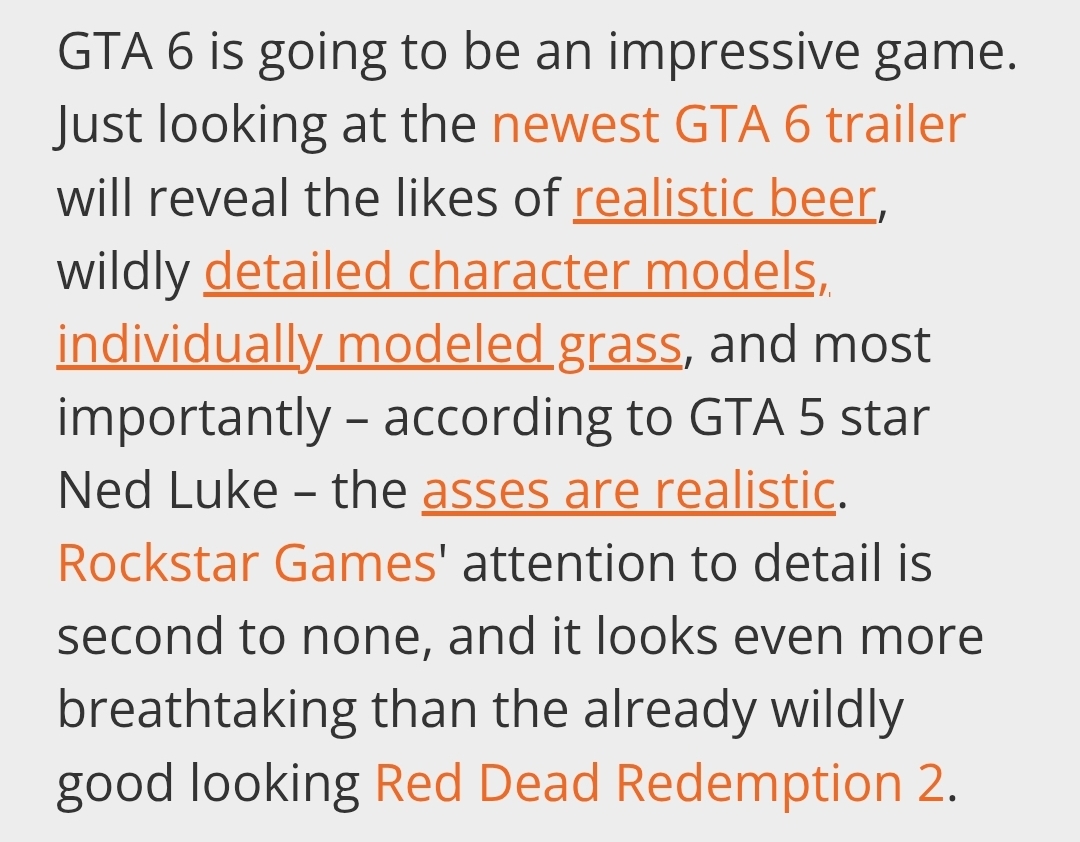
The issue isn’t that games cost money to make – it’s that studios have lost all sense of proportion and efficiency, then passed those inefficiencies on to consumers while pretending it’s about “content value.” Just look at the above screenshot, where Grand Theft Auto VI is being praised for individually modeled grass and freaking butts. Your next GTA will be more expensive because some pervy developer wanted to make coomer bait.
The Efficiency Paradox
Here’s the ultimate irony: modern games are designed to get you through them as efficiently as possible while simultaneously wasting as much of your time as possible.
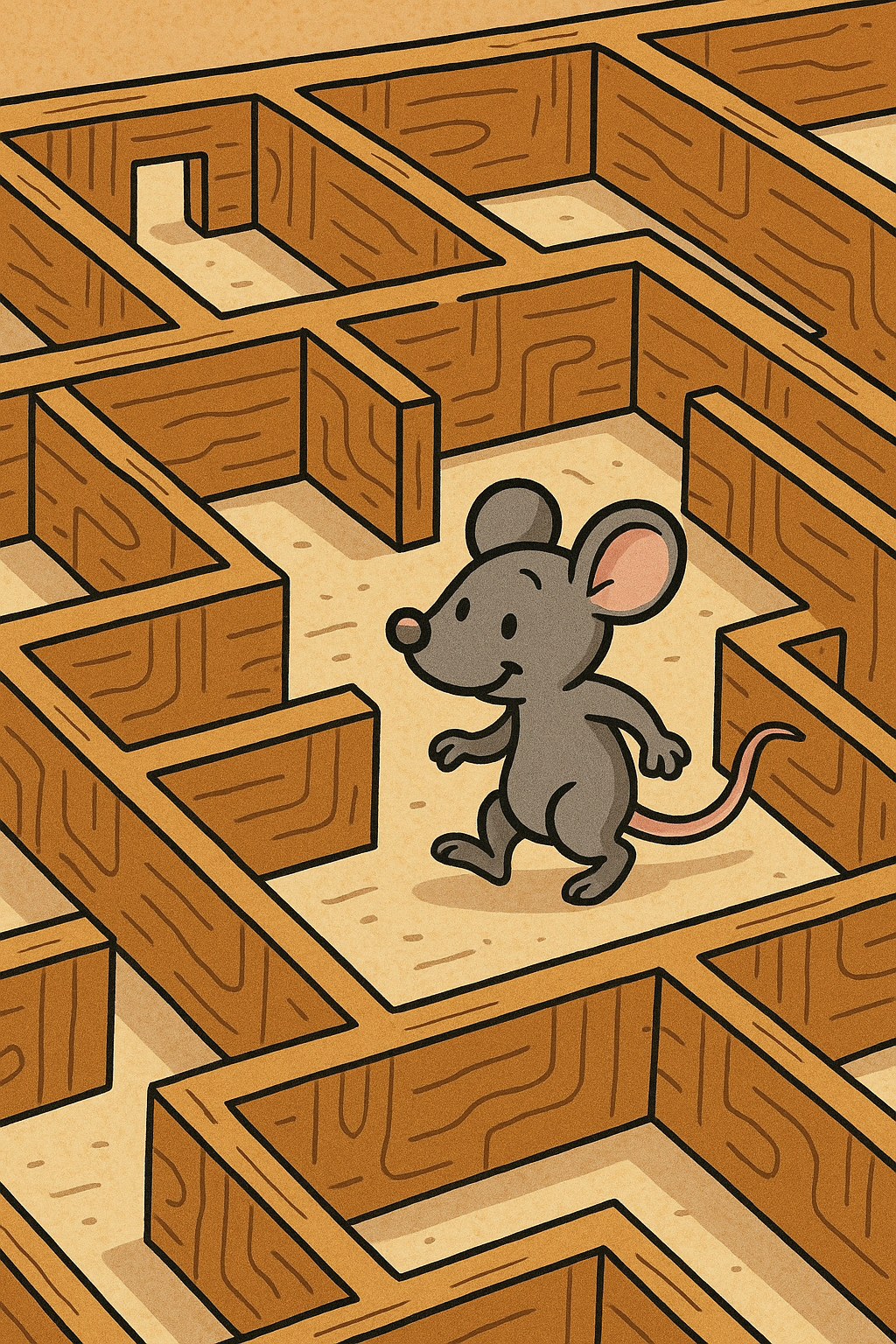
Think about it. Why do games have quest markers, breadcrumb trails, and glowing objectives pointing you exactly where to go? If efficiency was bad for entertainment, wouldn’t these be considered design failures? The answer reveals the industry’s twisted priorities: they’re not optimizing for your fun, they’re optimizing for content consumption metrics.
The quest markers aren’t there to help you–they’re there to ensure you see all the “content” the marketing department wants to brag about. You’re being efficiently shepherded through a content consumption pipeline disguised as a game.
And here’s the psychological masterstroke: if the game escorts you through in a streamlined, tidy way, it’s less likely to feel like it’s designed to waste your time. The smooth progression creates the illusion of meaningful advancement, even when you’re just being led through elaborate time-wasting exercises.
When Fans Become Unpaid Marketing
The propaganda works so well that gamers now voluntarily spread it. I recently watched a content creator argue that Mario Kart World’s $80 price isn’t a cash grab because “they had a lot of passionate developers working on it for a long time.” He was literally peddling Marx’s Labor Theory of Value without even knowing it.
Then he defended the fact that nobody’s playing the game by saying Nintendo made it to sell the Switch 2, not to make a good Mario Kart game. Think about that logic. “It’s okay that the game isn’t good because it was designed to sell hardware, not provide entertainment.”
This is Stockholm Syndrome in action, defending a company that’s actively making worse products while charging more money.
Breaking the Spell
The most efficient way to play a game is to not play it at all. So why are publishers trying to get as close to that as possible with mindless padding while simultaneously rushing you through predetermined experiences?
Because they’ve confused consumption with entertainment.
Real entertainment should be the opposite of efficient. You should want to linger, explore, experiment, and get lost. When a movie is “efficient,” we call it rushed. When a vacation is “efficient,” you’ve missed the point entirely. Yet gaming has convinced us that efficient consumption of predetermined content equals value.
Every time you buy a game based on “hours of content,” you’re telling the industry that padding works. Every time you defend bloated games because they offer “value,” you’re enabling the practices that make gaming worse.
The Nintendo Hypocrisy Test
Want proof that Nintendo doesn’t actually believe content equals value? A few years ago, they charged $5 for Balloon Fight, a 1984 NES game with maybe 15 minutes of unique content. By their current reasoning (the reasoning they use to justify $80 games), Balloon Fight should have cost about 30 cents.
But Nintendo charged $5 because they knew people would pay $5 for the nostalgia and simple fun.
Value came from what the game meant to players, not from how much stuff it contained.
The same company that thinks a 15-minute NES game is worth $5 now claims their $80 racing game is fairly priced because of “content.” The hypocrisy reveals their true understanding of economics; they know content doesn’t determine value.
Demanding Better
Value isn’t determined by how much stuff a game has. It’s determined by whether that “stuff” is worth your time and money. A 5 hour masterpiece that changes how you think about games is infinitely more valuable than a 100 hour checklist that wastes your life.
Stop buying games based on content metrics. Stop defending padding as “value.” Start demanding quality over quantity. Support games like Hades, which provides hundreds of hours of evolving gameplay through smart design rather than padding. Support games like Vampire Survivors, which costs $3 and delivers more value than most $70 releases. Support games like Clair Obscur: Expedition 33, which avoids that nonsense.
Vote with your wallet. Show the industry that we won’t accept:
- Games that waste our time with busywork;
- Pricing based on debunked economic theory;
- Content padding disguised as value;
- Psychological manipulation disguised as game design
Your time is worth more than whatever they’re trying to sell you. Don’t let them turn your hobby into homework.
The gaming industry wants you to think like an accountant: hours in, dollars out, optimization everywhere. But games aren’t spreadsheets or rice at Costco. They’re experiences. And experiences can’t be measured by the pound.
What do you think? Have you fallen for the content trap? Share your thoughts in the comments below, and don’t forget to check out the full video analysis of this topic.