We’ve just launched our new channel, Under the Hood Gaming! After existing for a few days, we’ve published our first video examining the psychology behind modern gaming practices. While we plan to post on Odysee as well, that’s a future project—our director is juggling multiple tasks right now, but it’ll happen within the next few weeks.
Your support would mean everything to us: subscribing to the channel, watching the video, and leaving likes, comments, and shares all help tremendously.
This isn’t our first critique of the Nintendo Switch 2 and Nintendo’s practices. I covered many of these issues in written form a few weeks ago, but the video adds new information and context. Plus, you can listen while doing dishes or commuting to work.
Why Gaming Content on an Anarchist Network?
This marks LRN’s expansion beyond talk shows into other content areas. After all, anarchist principles don’t require anarchist-themed shows exclusively—our values naturally emerge in our work, just as Stephen King’s progressive views appear in his novels without dominating them.
But how does a gaming channel fit an anarchist network? Liberty takes many forms. Beyond freedom from fear of death (which we’ve discussed on Free Talk Cast), we need freedom from psychological manipulation and the freedom to genuinely enjoy life. Modern gaming companies exploit psychological vulnerabilities for profit, and that’s worth examining.
Why I’m Criticizing Nintendo
You might wonder why I’m so critical of Nintendo lately. Ironically, it’s because I love Nintendo and want them to be the best gaming company, not the most exploitative. I want them to stop phoning in their game design for the same reason a parent would be frustrated watching their gifted child half-ass a piano recital.
Nintendo used to be the only company I’d buy from on launch day—I trusted their quality completely. I didn’t hesitate to pay $70 for Tears of the Kingdom. But somewhere along the way, I lost that trust.
Was it Skyward Sword HD for $60? Link’s Awakening selling for more than twice its original price despite running poorly? Echoes of Wisdom feeling overpriced at $60? Even Super Mario Wonder, which sounds excellent, feels like it should be called “New Super Mario Bros. 3″—and I can’t justify $60 for a 2D platformer that takes under 10 hours to beat.
The Content Pricing Contradiction
Nintendo claims games are priced according to content, but their pricing is wildly inconsistent. If Mario Kart World costs $80 because of its content volume, how did they justify selling Ice Climbers for $5? How are Super Mario Party and Super Mario Odyssey the same price as Paper Mario: The Thousand Year Door?
Nintendo must either price games according to content or not—they can’t claim one thing while doing another. Well, they can, but we should call out their bullshit.
The Media Problem
Gaming media seems complicit in this. They want to maintain access to review codes and exclusive interviews, so they soft-pedal criticism. I’ve seen sites describe Mario Kart World’s open world as “big and empty, with nothing to do” and then call it “wonderful” in the same paragraph.
Games media did criticize Welcome Tour for not being free, but this felt like a softball Nintendo threw deliberately. Having spent time in federal prison, I learned that when authorities are searching for something to criticize, you give them something minor to find so they don’t discover what really matters. Nintendo gave gaming sites Welcome Tour to critique while the real issues went unexamined.
I’m not claiming conspiracy, but the pattern is troubling. When gaming sites praise 5-year-old and 2-year-old games (Breath of the Wild and Tears of the Kingdom) as reasons to buy $450 hardware, that’s impressively out of touch with reality, and it suggests a bigger underlying problem with criticism not being directed at Nintendo. I’m financially comfortable, but I won’t pay that much to replay games I’ve already completed, even with minor improvements. The thought of buying new hardware to play graphically improved versions of games I’ve already paid (and paying extra for the improved versions!) is inherently gross to me, and games media spouting that justification feels like attempting to fleece gamers.
The Replay Problem
This highlights a broader issue. I’ve exhausted Pokémon Scarlet after 250 hours—competitive battling, perfect IV breeding, EV training, raid farming, even buying Violet for exclusives. There’s nothing left for me to do.
The same happened with Tears of the Kingdom after 112 shrines and 97 light roots. I started a second playthrough but quit after the second dungeon because nothing was different. Everything I did in the second run, I’d done in the first, but without the excitement of discovery. I’ve gotten a little more replay value from Breath of the Wild, but that’s because I skipped so many of BOTW’s shrines in my first two playthroughs.
I’m looking for new experiences. I’m sorry, but I’m not looking to play through Ocarina of Time again. And I’ve still got a Wii U, so if I want to play The Wind Waker, then I’m going to play its improved version, not the GameCube emulated version (by all accounts, Nintendo’s GameCube emulator is also pretty bad).
Upcoming Content: The Quest System Trap
Our next video, “Getting Played: The Quest System Trap,” examines how modern games have reduced exploration to following waypoints. You go somewhere because there’s an icon on your map. An NPC gives you a quest, you press L for your quest log, M for your map, and follow the waypoint to kill the enemy with the quest icon.
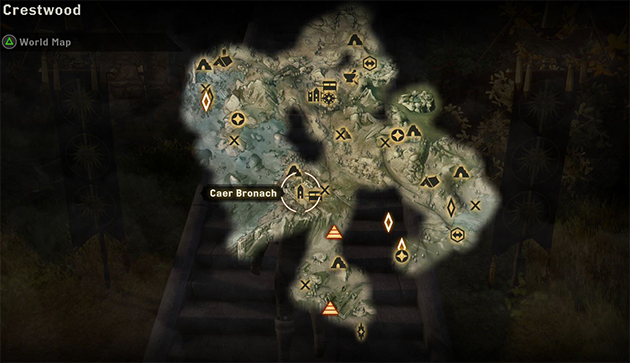
Why are you doing this? Who knows? And do you care anyway? The NPC probably explained, but there’s no reason to pay attention when the game provides all necessary information through UI elements.
This isn’t just nitpicking. Information processing used to be required for games, contributing to brain development through spatial modeling, problem-solving, and navigation skills. When games do this work for players—called cognitive offloading—we lose these abilities and become more dependent on automated assistance.
Animals play to hone survival skills. Humans do the same, developing alertness, coordination, and threat awareness. Video games traditionally served this function, but increasingly they reduce player involvement to mechanical actions while handling all information processing automatically. The result feels more like filling out a spreadsheet than engaging in meaningful play.
The Path Forward
Games can be better than this. As Clair Obscur: Expedition 33 proves, games can offer rewarding, enriching experiences that enhance our lives rather than just providing cheap dopamine hits from checking off items on a list.